Month: March 2015
Let Dark Chocolate Help You Get Fit
When you go on a traditional “diet” it seems that everything even remotely delicious is removed from your menu. Most people cut their caloric intake too far, consume tasteless food that rabbits would avoid, exercise until they drop and make themselves utterly miserable.
It doesn’t have to be that way.
You want to maintain a healthy weight – you want to be fit. You know that excess pounds can lead to heart disease, diabetes and depression just for starters. So how do you get there?
Stop “Dieting”
Good nutrition can still taste fantastic! In fact, fresh foods prepared well are much more delicious than the high-fat, high-sugar, high-additive pre-packaged choices. Most of those frozen and prepared foods taste awful!
When you start making “real” food part of your life you will never want that artificial stuff again.
Instead of giving yourself less food or no food – you need to give it the right foods more often. Make choices – such as green smoothies – that give you tons of fiber and nutrition with less fat and sugar.
68% of the American population is overweight – half of those people are obese.
Center for Disease Control and Prevention (CDC)
Exercise shouldn’t scare you. You don’t have to enter a triathlon to get results. Low impact and no impact exercises and strength training will give you measurable results while also making your bones and muscles strong.
Yoga, tai chi, walking, water aerobics and light strength training with resistance bands are inexpensive ways to get moving without feeling like you’ll need a week to recover.
How Dark Chocolate Can Help You Lose Weight
Over the last several years scientists have been examining the benefits of dark chocolate. While milk and white chocolate are still a no-no, the mix of good stuff  in varieties with 70% cacao or higher are irrefutable.
Top 5 Benefits of Dark Chocolate
- 1. A study published in
Science Daily
- found that dark chocolate slows digestion so you feel full for a longer period of time – which may curb your calories by as much as 15% at the next meal.
2. The Journal of Proteome Research reported that dark chocolate actually alters the human metabolism in a good way. The monounsaturated fats (MUFAs) in dark chocolate boost your metabolism which stimulates your body to burn fat.
3. People who eat dark chocolate have fewer cravings for foods packed with sugar, salt and fat.
4. According to the American Journal of Clinical Nutrition, dark chocolate does not stimulate insulin resistance that can lead to diabetes. When your body is resistant to insulin, your cells go into starvation mode because they aren’t getting the fuel they need. The result is more weight gain.
5. Dark chocolate has been shown to lower blood pressure, stress cortisol levels and reduce the LDL “bad” cholesterol in your body. All of this is due to the antioxidant-rich cacao content not duplicated in other forms of chocolate. Harvard Medical School found that the flavonoids in dark chocolate reduce your risk of coronary heart disease.
Can You Eat Chocolate and Weigh Less?
Eating chocolate actually helps lower your body mass index (BMI) – the measurement that pinpoints how much of your total body weight is actually fat.
One all natural variety – which is also part of the – contains all the antioxidants dark chocolate is known for with no gluten and high fiber.

Getting Healthy and Being Happy
Getting fit and meeting your weight loss goals doesn’t have to be frustrating or depressing. Improving your health can go hand-in-hand with happiness and positivity. You don’t have to deprive yourself of the foods and flavors you love most.
– and why they are dangerous to your health.
Did you know…that certain foods contain a hormone that causes your fat cells to expand – thereby making your body look bloated?
on the Beverly Hills Mega Weightloss System on how you can lose weight working with your body’s natural biochemistry instead of working against it.
6 Tips to help you Erase that Cellulite
The American Society for Aesthetic and Plastic Surgery estimates that 90% of women have cellulite, but we’d venture to guess that every woman grapples with unwanted dimples at some point in her life. It doesn’t matter if you’re curvy or skinny, short or tall… the fact that you’re a woman is enough of a reason for cellulite to strike. You may be more susceptible due to genetics, poor circulation, toxin buildup and inflammation. When fat cells grow larger and push through your fibrous bands of tissue, the cottage cheese look crops up on thighs, bellies and arms.
We aren’t sitting idly by. Cellulite is big business. American women spend upwards of $12 million annually on expensive anti-cellulite lotions. Cellulite cures, both natural and surgical, attempt to melt away the fat that has accumulated in your tissues, while encouraging collagen and elastin growth. (Collagen and elastin are the main components of connective tissue; the stronger your collagen, the less your cellulite.) Before you spend any more money on creams that temporarily reduce the appearance of cellulite, let’s take a look at some dietary changes you can implement that may actually help eradicate cellulite for good.
The Anti-Cellulite Diet
If heart disease and insulin resistance aren’t enough to get you to cut back on your salt and sugar intake, then perhaps cellulite will convince you. You may eat a low-fat diet, but if you eat too much sugar you’re still 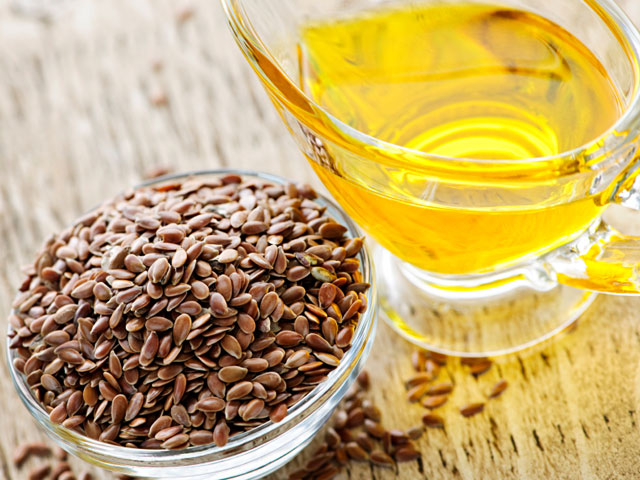 exacerbating the growth of fat cells. Excess sugar gets trapped in fat cells, causing them to swell into unsightly cellulite. Likewise, too much salt promotes fluid retention, which shines a spotlight on your cottage cheese. In order to minimize the appearance of cellulite, limit sugar consumption to six teaspoons per day, and don’t eat foods with more than 200 mg of sodium.
You can also help banish cellulite with the flaxseed trick. Flaxseed maintains estrogen levels and encourages collagen production. Add two tablespoons to cereal, yogurt or oatmeal each day.
Whittle away your cellulite with water. Eight to ten glasses of water a day will help flush toxins from your fat cells and keep your skin hydrated and plump so that cellulite is not as noticeable.
Supplement with seaweed. Kelp contains a chlorophyll compound called fucoxanthin that revs up the body’s fat-burning engines. Studies have found that supplementing with kelp can trigger a loss in body weight of 5-10% and directly reduce the appearance of cellulite. Add dry kelp to soup, or sprinkle it on stir-fries and salads. If supplementing in tablet form, look for a concentration of 300 mg.
Gotu kola extract has also been clinically shown to reduce cellulite by improving skin elasticity and thickness.
Cellulite Creams
If you’re looking for a quick fix to help mask cellulite, look for a cream containing the organic compound aminophylline, which helps break down trapped fat. Vitamin C is another superstar ingredient known for its collagen-boosting effects. Retinol cream is an effective cellulite solution that defends against the free radicals that damage collagen. Look for 100% retinol cream with added vitamins A, C and E.
Pomegranates
Pomegranates have been prized for their nutrition value for more than 4,000 years, especially in the ancient world of the Middle and Near East.
Now, research shows that this time-honored fruit can fight heart disease…support healthy cholesterol levels…lower blood pressure…relieve stress…improve your sex life…and, according to a brand-new study, even slow down the aging process of DNA.

Pomegranate Benefits: An Anti-Aging Super Food
In November of 2011, scientists from the ProbelteBio laboratory in Murcia, Spain conducted a month-long study of the effects of pomegranate extract. The study focused specifically on the pomegranate’s rich stores of antioxidants (important compounds that prevent age-related cell damage).
The research team recruited two groups of volunteers. The first group was given extracts of the whole pomegranate fruit in capsule form (extracts included the pith or membrane, peel, and seeds). The second group received a placebo.
The research team was highly impressed with their results. Those who took the pomegranate extract showed a significant decrease in a specific, important marker linked to cell damage.
That marker, known as 8-Oxo-DG, can have detrimental effects such as:
- • Lessened brain function
- • Weakening of muscles
- • Impaired kidney function
- • Decrease in liver productivity
- • Aging of the skin
Sergio Streitenberger, lead researcher at ProbelteBio, believes the study “demonstrates that the regular consumption of this pomegranate extract can slow down the process of DNA oxidation.”
The pomegranate’s ability to decrease 8-Oxo-DG suggests that it wields significant power as an anti-aging super food.
Why Antioxidants Are The Ideal Anti-Agers
Antioxidants are crucial for preventing and reversing aging because they stop damage wrought by destructive free radicals.
“One way to look at aging is to think of it as rusting,” Streitenberger said, “or oxidizing.” Free radicals oxidize our body’s molecules. Everyday we take in these dangerous compounds in the food we eat, the beverages we drink, and even the air we breathe. “We get old because we fall apart cell by cell,” said Streitenberger.
Sandeep Prabhu, assistant professor of immunology and molecular toxicology at Penn State, says that foods especially rich in antioxidants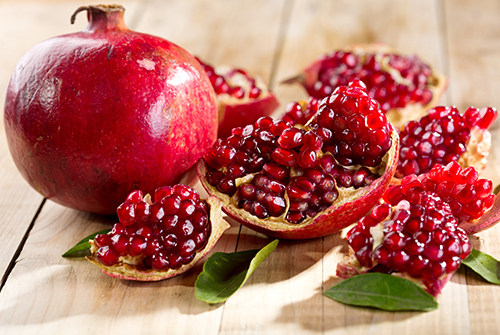 —such as pomegranates—qualify as anti-aging super food because they have “the ability to neutralize harmful molecules in our cells.”
Once free radicals reach the DNA of our cells, Streitenberger warns, “the damage is cumulative and significant.” This is why the ProbelteBio study is so astounding. For any food to so effectively guard against the aging process “would be a significant breakthrough,” says Streitenberger.
A Pomegranate A Day…Unbelievable Benefits
Some scholars believe the forbidden fruit said to have tempted Eve in the Garden of Eden was actually a pomegranate, not an apple. It could have been a mistranslation, because the word pomegranate comes from the Middle French pomme garnete, literally “seeded apple.”
Therefore, you might consider the pomegranate as the deluxe version of the apple, capable of so much more than simply keeping the doctor away.
But it’s important to remember that experts say the most potent pomegranate benefits come from consuming the whole fruit, not just the delicious seeds. Most commercial juices draw their content only from the seeds, and contain only small quantities of the powerful antioxidants that protect against aging. The real powerhouses are the inedible rind, hulk, and white pith.
These non-seed parts of the fruit are described as “inedible” not because they are toxic, but due to their bitter taste and unpleasant texture. With that in mind, heath practitioners recommend that you consider taking a supplement pill or health drink made with extracts of the whole fruit.
Citrus Fruits and Tea Can Help Lower Ovarian Cancer
New research reveals that women who consume foods containing flavonols and flavanones (two forms of dietary flavonoids) cut their risk of developing epithelial ovarian cancer. This is amazingly good news for women, because ovarian cancer is currently the 5th leading cause of cancer death among women. About 20,000 women in the U.S. are diagnosed with ovarian cancer each year.

An Extremely Deadly Cancer
Ovarian cancer is one of the deadliest of all cancers affecting women. One of the reasons this type of cancer is so terribly dangerous is that it is nearly impossible to detect early. Only about 19% of ovarian cancer is diagnosed before the cancer has spread, after which point treatment is usually not effective.
Making matters worse is the fact that the ovaries are tiny organs located deep within the abdominal cavity. This makes it extremely difficult to pinpoint symptoms specific to the ovaries. Sadly, such symptoms are all too often mistaken for other far less serious health issues until it is simply too late.
The good news is that there are choices you or your loved ones can make to lower ovarian cancer risk. Most recently, scientists at the University of East Anglia (UEA) discovered that tea and citrus fruits and juices can lower ovarian cancer risk.
How Tea and Citrus Prevent Ovarian Cancer
The UEA study followed the dietary habits of 171,940 women between the ages of 25 and 55 for more than three decades. The research team found that those who consumed food and drinks high in flavonols were less likely to develop ovarian cancer.
Flavonols are found in…
- Tea
- Red wine
- Apples
- Grapes
Consumption of flavanones was also associated with lower incidence of ovarian cancer.
Flavanones are found in …
- Citrus fruits
- Citrus juices

| Two Cups A Day The consumption of just two cups of black tea every day was associated with a whopping 31% reduction in ovarian cancer risk. Black tea also slashes your risk of diabetes. A study of elderly people living in the Mediterranean islands showed that people who consumed 1-2 cups of black tea a day had a 70% lower chance of having or developing Type 2 diabetes. |
A Groundbreaking Study
The UEA study was the first large-scale study to examine how the substances in black tea and citrus fruits and juices affect the risk of ovarian cancer. The study’s authors concluded that very simple and inexpensive changes in food intake could have a drastic effect on reducing ovarian cancer risk.
Why You Need Baking Soda
Baking soda could very well be the one thing you need in your pantry. It has been shown to fight cancer, stave off colds and flu, and even treat radiation poisoning…all for just pennies a day?
Vernon Johnston has a very important question for you: “do you want to live?” That was the question he asked himself when he was diagnosed with stage IV prostate cancer in 2008.
His answer was a resounding “yes!” Despite the fact that the doctor who diagnosed his cancer told him there were no treatment options, Johnston is still alive today, thanks to sodium bicarbonate, more commonly known as baking soda.
One Man’s “Dance with Cancer”
By the time Johnston’s cancer was diagnosed, it had already spread to his bones. When his doctor delivered the news, Johnston remembers thinking, Stage IV? There is no stage V. But his online research led him to a website promoting the Baking Soda And Cancer Cure.
This became the cornerstone of Johnston’s self-applied treatment program.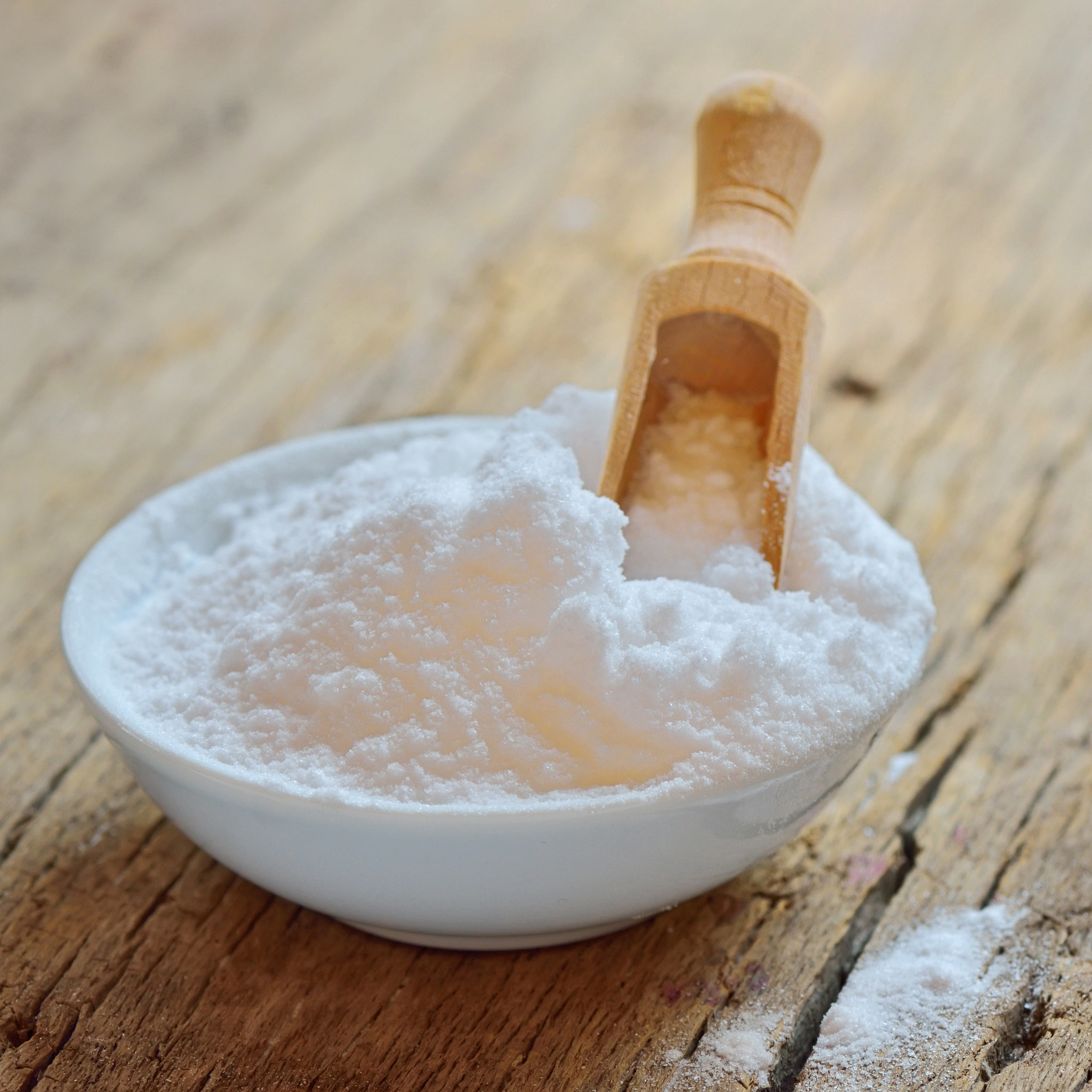
After 10 days of daily dosing with a special baking soda solution, Johnston went in for a second bone scan. After a few days of frantic waiting, the results finally arrived: “No convincing evidence of an osseous metastatic process.” In other words, the baking soda had stopped his cancer.
Stopping Fungus Might Stop Cancer
Two medical pioneers–Mark Sircus, Ac., OMD and Dr. Simonchini, an oncologist in Rome–have conducted compelling research on the potential of baking soda and cancer treatment.
Their groundbreaking work is based the hypothesis that fungal infections and cancer proliferation are connected, and that stopping the fungus can stop the cancer.
According to health writer Mike Adams of Natural News, “Dr. Simonchini “originally made the connection between fungal infections and cancer proliferation. He realized that when a tumor was flushed with baking soda (which is anti-fungal), it shrank and completely disappeared within days.”
Dr. Sircus expanded on this research further, exploring the effects of ingesting baking soda to halt cancer.
Baking Soda for Colds and Flu
Research has shown that baking soda can also be helpful in combating contagious illnesses like colds and flus. With cold weather arriving fast, many are seeking natural alternatives to harsh and ineffective antibiotics and vaccines.
For those who wish to use baking soda for that purpose, experts recommend the following dosage:
Day 1: Consume a total of 6 doses of half a teaspoon of baking soda in 1 cup of water. Take at 2-hour intervals.
Day 2: Continue the same protocol, but reduce to 4 doses.
Day 3: Consume only 2 doses, 1 in the morning and another at night.
Day 4: Continue on day 4 and thereafter with 1 dose in the morning until illness is cured.
The broad spectrum of uses for baking soda serves as a powerful reminder of a commonly overlooked truth about medicine: the simplest solution is often the best one.
Time-tested remedies, like baking soda and cancer, may not be breaking news, but they’re worthy of our attention. After all, the reason they’ve been around for so long is that they work!
Tomatoes can Help Reduce the Risk of Prostate Cancer
What’s the second most common cancer in men worldwide? Prostate cancer… and it’s much more prevalent in developed countries. Experts believe that higher rates of prostate cancer in industrialized nations are partially due to the Western diet and lifestyle. Researchers from the Universities of Bristol, Cambridge, and Oxford recently identified three dietary components that may help slash your risk for prostate cancer.
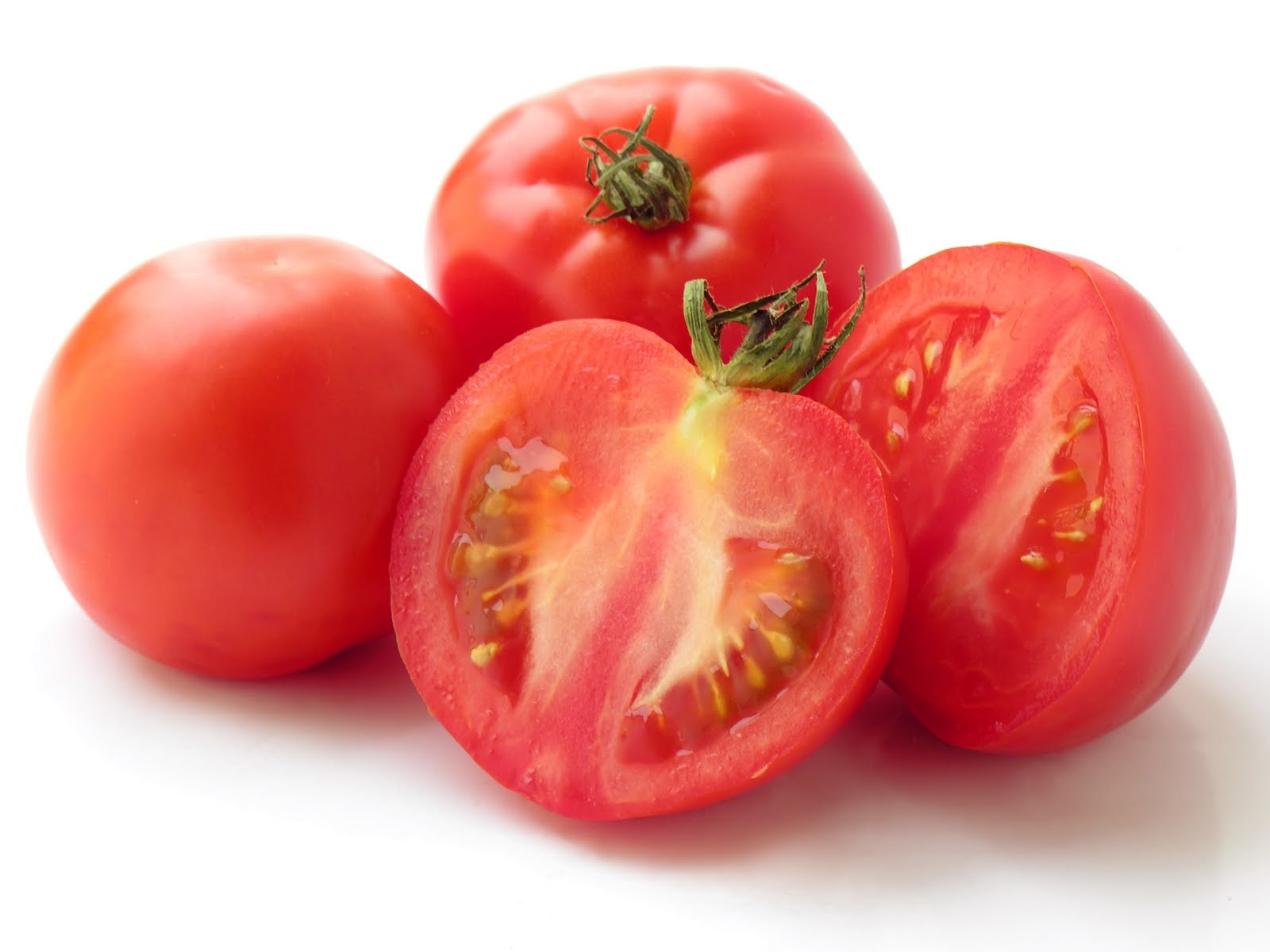
Lycopene, an antioxidant found in tomatoes, stood out as the all-star prostate cancer-fighting nutrient.
10 Tomatoes a Week Keep the Doctor Away!
The study, published in Cancer, Epidemiology, Biomarkers and Prevention, is the first “dietary index” to track dietary components and their effects on prostate cancer. Researchers compared the diets and lifestyle behaviors of 1,806 prostate cancer patients between the ages of 50 and 69 with 12,005 cancer-free men. They discovered that selenium, calcium, and lycopene effectively reduced prostate cancer risk, with lycopene showing the most influence.
| FACT: Men who consumed 10 portions a week of tomatoes or tomato products (like baked beans or tomato juice) had an 18% reduced risk for developing prostate cancer! |
Lead researcher Vanessa Er, from the School of Social and Community Medicine at the University of Bristol and Bristol Nutrition BRU, explains: “Our findings suggest that tomatoes may be important in prostate cancer prevention. However, further studies need to be conducted to confirm our findings, especially through human trials. Men should still eat a wide variety of fruits and vegetables, maintain a healthy weight and stay active.”
Researchers also analyzed lifestyle factors, particularly the anti-cancer lifestyle recommendations for diet, physical activity, and body weight set forth by the World Cancer Research Fund (WCRF) and the American Institute for Cancer Research (AICR). While the suggestions of these two organizations are pertinent to overall cancer prevention, they aren’t targeted at prostate cancer prevention, and researchers determined that only dietary recommendations lowered prostate cancer risk. This study confirms that a high intake of fruits, vegetables, and fiber helps lower your odds of a prostate cancer diagnosis.
The Anti-Cancer Effects of Lycopene
Lycopene is a carotenoid found in fruits such as the tomato, apricot, guava, and watermelon. It has been shown to shield against toxins that damage DNA and cells. Previous studies have shown that lycopene suppresses androgen receptor expression in prostate cancer cells in vitro, and decreases prostate cancer cell proliferation. Lycopene has also been shown to protect against cardiovascular disease and macular degeneration (the primary cause of vision loss in people over 60).
To increase your lycopene consumption, add some tomatoes, grapefruit, asparagus, parsley, and carrots to your diet. You’ll notice the results from the inside out, as lycopene also helps your skin maintain a radiant, healthy glow.
- ← Previous
- 1
- 2
 HealthyDad